Emma Grede 7 min read
How Cardi B Learned to Stop Making Everyone Else Rich
See how Cardi B ownership became a legacy play, from self-funding music to building brands with control. Read the full story.
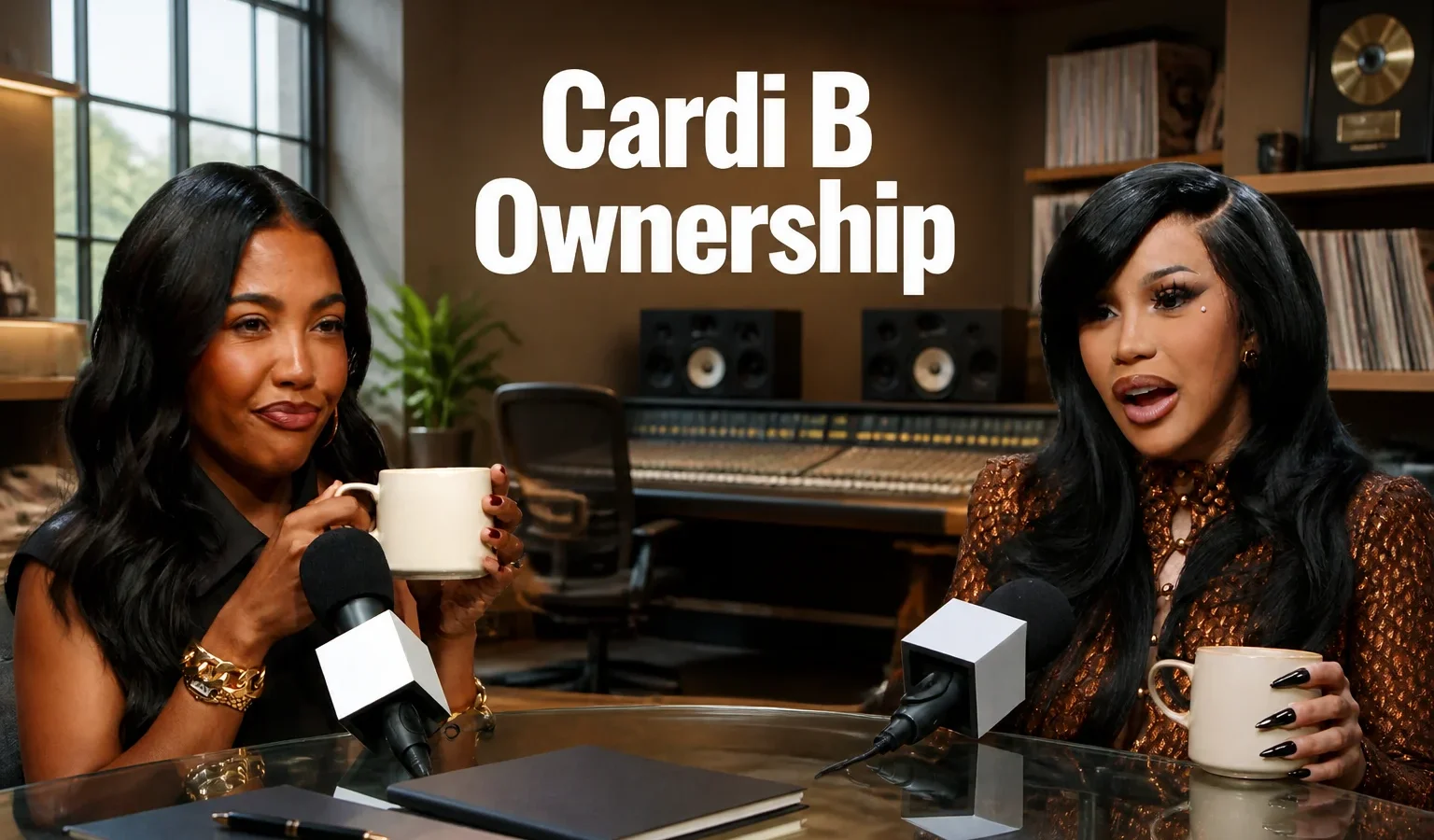
This article draws on our conversation with Cardi B.
Ownership became the goal when Cardi B decided she was done making other people rich off her name while she took the smaller piece. Within a year, she says, her thinking changed hard: she feels like a new person, and having four kids pushed work, family, and legacy into the same conversation.
Cardi B says the shift started with a blunt realization that the old way could not be the ending for her. She ties that change to becoming a mother of four and to looking at how much value her attention, taste, and labor were creating for everyone around her.
“I know that this cannot be my ending.”
— Cardi B (6:18)
How did Cardi B pay for her career before ownership was even on the table?
Cardi B funded her own start because her first manager did not have money, so studio time, clothes, and early music costs came out of what she earned herself. She says she put every dollar from club hosting, promoting, and later reality TV back into music instead of waiting for somebody else to finance the plan.
One example says a lot about how she worked then: she describes paying for a music video, having only $2,000 left after it, and hoping a million YouTube views could turn that gamble into $30,000 (11:10). That is not passive celebrity money. It is operator behavior long before the ownership language got polished.
She also says speed mattered. If she wanted a track done, she could make a song in two days (13:20), which meant the business side and the creative side were tied together from the beginning. Spend, release, see what moves, then do it again. That early cycle helps explain why ownership matters so much to her now: she was already taking the risk before she was getting the full upside.
What changed her mind about ownership?
Ownership became urgent when Cardi B started thinking about legacy, control, and what her children will inherit, not just what a deal pays upfront. She says a lot changed within a year, and the biggest personal change was looking at business decisions as a mother with four kids instead of only as an artist taking the next opportunity.
She does not describe that as a soft lifestyle shift. She describes it as a sharper business lens. The question stopped being who wanted to work with her and became who was building something worth attaching her name to for the long run.
“We want it all. We want it all.”
— Cardi B (42:48)
That includes reach. She says she wants Grow Good everywhere, and she names Target, Ulta, and Sephora as the kinds of shelves she is thinking about. The goal is not a small celebrity project that spikes on launch day and fades. The goal is a real consumer business built around products she actually uses and cares about, with the scale to outlast a single news cycle or campaign.
Why does Cardi B obsess over the numbers now?
Cardi B watches the numbers because she says distance from the money is how people get burned. Her standard now is direct visibility: if the figures are not on her phone and in front of her constantly, she assumes somebody else is benefiting from her work faster than she is.
“I need to see the numbers every day.”
— Cardi B (20:33)
That line sits next to two money lessons she names plainly. One is taxes, which she includes as part of growing up financially instead of treating income like spendable cash. The other is account oversight, down to recognizing where money leaks through habit, convenience, or not paying attention.
Her clearest example is transportation. She says she realized she had spent a million dollars in a year on driving transportation (45:56). That is the kind of expense that feels normal when cash is coming in fast and other people handle logistics, but it becomes impossible to ignore once ownership is the goal. Watching the numbers every day is not about paranoia in her telling; it is how she protects power, respect, and the value she is creating.
What does Cardi B look for in a business partner now?
Cardi B wants proven partners now because she has no interest in being the experiment that teaches someone else how to build. She says she wants people with real experience, a strong product, and strong marketing behind the business before her name goes on it.
“I don’t want to be anyone’s first.”
— Cardi B (39:42)
That standard gets even clearer when she talks about growth. Around 2024, she says she called Patience and said they were wasting time and needed to think bigger (21:42). The target was not a nice launch or a good quarter. She says she does not want anybody around her getting comfortable at the first 100 millions (24:42).
She also says she was told she could probably come up with a million things (31:10), but having lots of possible ideas is not the same as choosing the right one. Her filter now is practical. Does the partner know how to execute? Is the product good enough without celebrity heat? Can marketing and distribution carry the business past the first wave of attention? If those answers are weak, she is not interested.
What does ownership mean to Cardi B beyond money?
Ownership means power and respect to Cardi B, not just a larger check. She talks about feeling different now because money alone no longer answers the bigger question of who controls the business, who sees the upside first, and who gets remembered as the builder.
That is why she keeps coming back to products she genuinely uses and cares about. In her telling, ownership only makes sense if the business connects to real habits and real standards, not random licensing or easy endorsement money. A brand has to be able to stand up as a product company, not just as a famous person with packaging.
“My god, they really get whatever they want.”
— Cardi B (1:00:54)
She uses that frustration to define the new standard for herself. Other people should not be the only ones getting convenience, access, and scale while she provides the magnet. Ownership is the correction. It gives her a claim on the asset, a say in the decisions, and something durable to build for her family instead of a string of one-off paydays.
What is Cardi B building all this for?
Cardi B says the end goal is a legacy her children can inherit, and that is why the timeline feels urgent now. She talks about businesses launching, a 2026 tour coming, and a schedule that forces her to think about what lasts after the performance, the campaign, and the appearance fees are gone.
She does not separate work from family in this part of the conversation. She joins them. Having four kids changed what success needs to look like, because a hit song and a paid partnership are temporary, while ownership can become something her family keeps.
“H, when are we ever going to have a hot girl summer?”
— Cardi B (1:15:57)
The joke lands inside a packed life, but the larger point is simple enough: the calendar is full because the ambition is bigger now. She is not describing a slowdown or a retreat. She is describing a push to build businesses with enough size, distribution, and control that the next chapter does not depend on making everybody else rich first.
FAQ
Why did Cardi B start caring more about ownership?
She says becoming a mother of four changed how she thinks about work, legacy, and who benefits from her effort. She no longer wants other people taking the biggest upside from businesses built on her name and influence.
Did Cardi B fund her own music career at first?
Yes. She says her first manager did not have money, so she paid for studio time, clothes, and music herself with money from club hosting, promoting, and reality TV.
What does she want from business partners now?
She says she wants proven partners, a strong product, and strong marketing. She does not want to be the first big test case for people who have not already shown they can build.
What money mistakes did she say she learned from?
She points to taxes, not watching accounts closely enough, and realizing she had spent a million dollars in a year on driving transportation. Those lessons pushed her to monitor the numbers much more closely.
What does she want for Grow Good?
She says she wants Grow Good everywhere and specifically names Target, Ulta, and Sephora, which shows she is thinking about national retail scale rather than a small celebrity side project.
Listen to the full episode
Watch the full conversation on YouTube — the episode goes further than any article can, and subscribing means you catch the next one.
 Watch this episode on YouTube · Subscribe to Emma Grede
Links from this episode
Mentioned in the episode. Some of these may be affiliate or sponsored links.
This content was created with the help of AI (Antradus AI - gpt-5.4).