Emma Grede 5 min read
What Does Cardi B Think About Investing and Ownership?
See how Cardi B approaches ownership investing through property, equity, and control instead of hype. Read the full breakdown now.
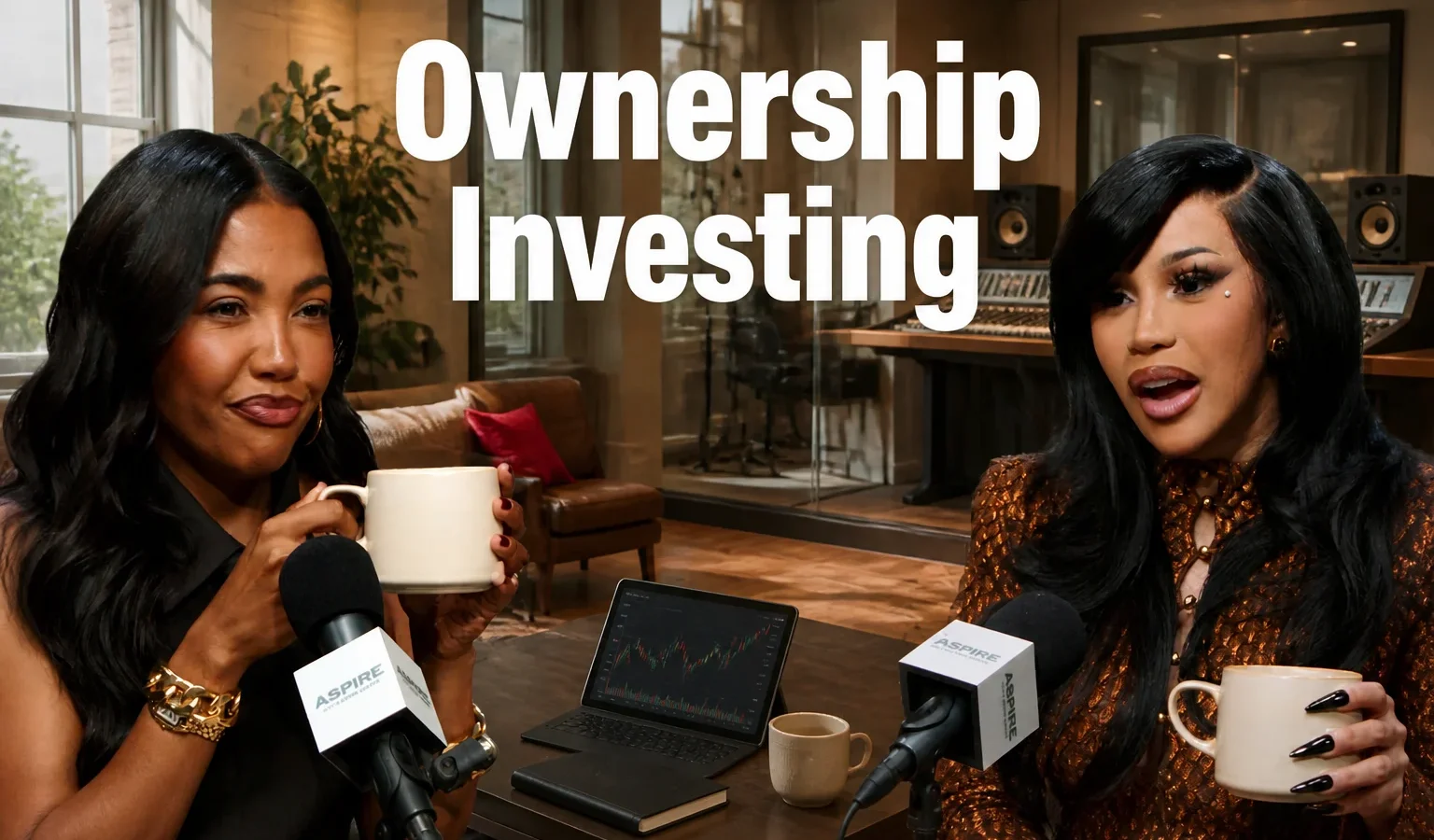
This article draws on our conversation with Cardi B.
Cardi B treats ownership investing as a shift away from quick endorsement checks and toward assets she can understand, influence, and eventually leave to her children. She talks about money less as a score and more as control: who owns the thing, who makes the decisions, and who benefits years later.
That change sits inside a longer arc. She says she had been growing her business and brand for seven years (40:50), and becoming a mother of four sharpened how she thinks about legacy, inheritance, and what lasts beyond a paycheck (2:43).
Why does Cardi B prefer ownership over simple endorsement money?
She prefers ownership because she no longer wants to help build other people’s wealth while keeping only the fee. The focus here is not abstract finance language. It is about getting out of deals where the brand, the upside, and the long-term value belong to somebody else while she does the visible work.
“Not everybody with money are good partners.”
— Cardi B (0:49)
That explains why she talks about choosing carefully, not just choosing anything with a check attached. Money alone does not make a partner useful, and access alone does not make a deal smart. The standard she describes is tighter than celebrity participation for appearance’s sake. She wants businesses built around things she actually likes and spends time on, which makes ownership feel connected to her real life rather than pasted onto her image.
Her version of ownership investing is practical. Instead of spreading money everywhere, she talks about putting it where she can follow the logic of the business and where her involvement means something. The goal is not simply earning more this quarter. The goal is building something that holds value after the campaign ends.
She also ties that shift to family. With four kids in view, ownership becomes something you can pass on, not just something you can spend. That is the difference running through her comments: income pays you once, while a stake in a business or asset can keep paying, keep growing, and stay in the family.
What does Cardi B actually invest in?
She says she puts money into property, little businesses opening up, and occasional equity offers, while avoiding markets she does not understand. That answer matters because it is narrower and more disciplined than the catch-all idea of celebrity investing.
Property fits the pattern she describes. It is tangible, easier for her to grasp, and tied to ownership in the plainest sense. The same goes for small businesses opening up. Those are not described as flashy bets or trend chasing. They sit closer to something she can see, judge, and understand.
She also mentions that people sometimes offer her little equities. Even there, the language stays cautious. She is not talking like someone who wants every cap table in sight. She is talking like someone sorting opportunities by whether they make sense to her.
Her line on the stock market and crypto is even clearer: she does not invest in them because she does not understand them. That is a real boundary, not a branding pose. Plenty of people feel pressure to look financially sophisticated by buying whatever sounds modern. She does the opposite. If she cannot explain it to herself, she leaves it alone.
That makes her ownership investing selective rather than universal. She is not presenting a complete theory of all investing. She is describing a personal filter: understandable assets, direct influence, and a path to long-term control.
How does Cardi B decide whether a business move is worth making?
She decides by asking whether the business is understandable, connected to her real interests, and structured so she can keep sight of the money. Her comments make clear that ownership is not passive in her mind. She wants involvement, visibility, and enough proximity to know what is going on.
“I need to see the numbers every day.”
— Cardi B (20:33)
That standard rules out a lot. It pushes her toward business models where the mechanics are visible and away from ones that ask for blind trust. It also explains why she talks about building around things she actually uses or spends time on. Familiarity is part of the screen. If she knows the customer, the product, and the demand from her own life, she has more confidence in the move.
She also gives a broader lesson for creators: do something with your following and make every follower a dollar. The point is not squeezing an audience. The point is that attention by itself is not ownership. If you build nothing behind that attention, somebody else usually captures the value.
She places that in a generational frame too. She says creators now have opportunities she did not have when she was 10 years old. So the ambition is bigger than getting paid to show up. Build assets. Take equity where it makes sense. Put money into things you can influence directly. Then the business becomes power, not just income, and something your family can inherit.
FAQ
Does Cardi B invest in stocks?
No. She says she does not invest in the stock market because she does not understand it.
Does Cardi B invest in crypto?
No. She puts crypto in the same category as stocks for her own finances: if she does not understand it, she does not put money into it.
What kinds of investments does Cardi B say she prefers?
She says she puts money into property, little businesses opening up, and some small equity opportunities that make sense to her.
Why does ownership matter so much to Cardi B?
She connects ownership to legacy. She wants to stop making everyone else rich, build things she can influence, and leave assets to her children.
What is Cardi B’s message to creators about money?
She says creators should do something with their followers and make every follower a dollar, meaning they should turn attention into assets or businesses they actually own.
Listen to the full episode
Watch the full conversation on YouTube — the episode goes further than any article can, and subscribing means you catch the next one.
 Watch this episode on YouTube · Subscribe to Emma Grede
Links from this episode
Mentioned in the episode. Some of these may be affiliate or sponsored links.
This content was created with the help of AI (Antradus AI - gpt-5.4).