History That Doesn't Suck 8 min read
What Pearl Harbor Still Teaches Us About Surprise, Assumptions, and Failure
Learn the surprise attack lessons Pearl Harbor still offers about warning, bias, and missed action. Read the key failures now.
This article draws on our conversation with Steve Twomey.
Surprise attack lessons start here: Pearl Harbor was not a clean story of total blindness, but a story of warnings that arrived, assumptions that filtered them, and failures to chase down what they meant.
Greg Jackson places this discussion after episode 194 on the attack itself and episode 193 on the road to war with Japan (0:24). He also notes that Steve Twomey’s book carries the subtitle The 12 Days to the Attack, and that its jacket points readers to the 1st torpedo drop as part of the drama it follows (1:01).
Why did Pearl Harbor become a lesson in surprise instead of a lesson in warning?
Pearl Harbor became a lesson in surprise because the warning existed, but the people receiving it did not turn it into the right action. Steve Twomey says he built the story as a suspense narrative beginning on November 27th, 1941, when Washington sent a message saying, in part, that the dispatch should be treated as a war warning and commanders should make an appropriate defensive deployment.
“I wanted to write a thriller, a suspense story.”
— Steve Twomey (5:50)
He ties that suspense to process, not mystery. The record survives in what he describes as about 50 volumes of mostly question-and-answer testimony from the many inquiries that followed, and he says Pearl Harbor may be the most investigated event in American history except, perhaps, the Kennedy assassination. In the same account, he says there were nine official government investigations. That matters because the problem was not a blank page. People left a long trail showing what they knew, what they assumed, and what they failed to press.
Greg Jackson also mentions his own book structure elsewhere in the conversation, saying it tells 8 stories (2:49). Here, though, the point is narrower: the real suspense in Twomey’s telling sits in the gap between warning and response.
Why didn’t Admiral Kimmel think Hawaii was the target?
Admiral Husband Kimmel did not think Hawaii was the target because he expected Japan to strike somewhere else, even though American planners had already imagined a carrier attack on Oahu. Twomey says a document from March of 1941 described a surprise air strike on Hawaii launched by carriers, and he notes that the real attack came 8 months later (21:13).
That earlier imagination did not settle into belief. Kimmel had warning that war was close, but he still did not expect the blow to land at Pearl Harbor. Twomey describes a wider culture of underestimation around Japan: American officers tended to treat the Japanese as imitators, as weaker aviators, and as people who were not true sailors in the same class as Western navies. If you start there, evidence has to fight its way uphill.
The relationship between Kimmel and Admiral Stark made that worse because each man assumed the other would do what was needed. Twomey puts that trust plainly.
“They trusted each other to do the right thing at the right time.”
— Steve Twomey (14:50)
Trust sounds healthy until nobody checks. In this case, it meant follow-through thinned out at exactly the moment when assumptions should have been tested hardest.
Did the United States have real warnings before the attack?
The United States had real warnings before the attack, but they were partial, fragmented, and easy to misread if you already believed Japan would strike elsewhere. Twomey says American officials had broken the Japanese diplomatic code, yet they had not broken the Imperial Navy or Army operational codes, so they could read some intent without seeing the full military plan.
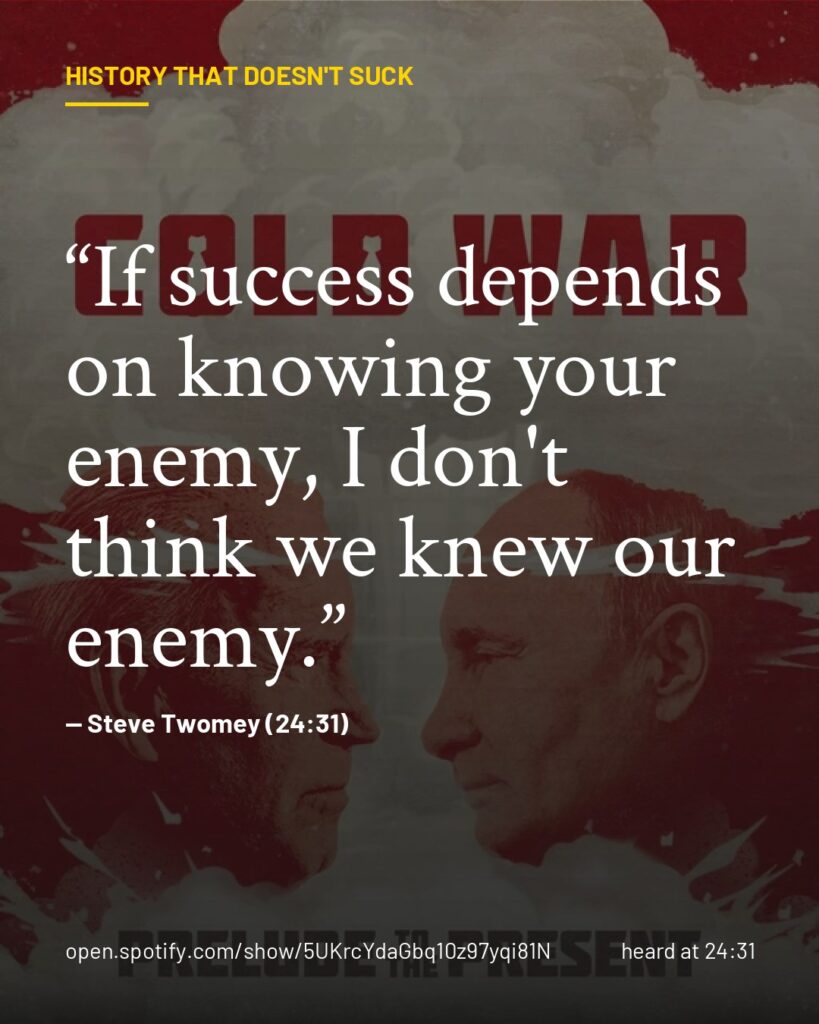
“If success depends on knowing your enemy, I don’t think we knew our enemy.”
— Steve Twomey (24:31)
The warning signs still piled up. A November 29th message said war was near and that events would begin on their own rather than through another warning from Washington.
“Things are automatically going to happen.”
— Steve Twomey (25:43)
Then came a sharper signal on December 1, when the Japanese fleet code changed only one month after the previous change, even though the usual interval was every six months (26:26). By December 3, Japanese consulates were destroying papers and code machines. None of those clues named Pearl Harbor as the precise target, but together they pointed to imminent war and to the need for harder, faster checking.
Twomey’s argument is not that officials knew every detail. It is that they had enough to stop acting as though time remained.
What assumptions blocked the warning signs?
The warning signs ran into assumptions about Japanese ability, American routines, and what counted as the most likely threat. Twomey says many officers discounted the idea that Japan could pull off a long-range carrier strike because they did not credit Japanese naval aviation with that level of skill.
That attitude shaped what details looked like. A code change became one more signal instead of the signal that should force a new posture. Destruction of papers looked ominous, but not decisive enough to reorder local thinking. Even the war warning of November 27th left room for interpretation because it told commanders to make an appropriate defensive deployment rather than spelling out exactly what to do at Pearl Harbor.
Twomey keeps bringing the story back to protection rather than prediction. Commanders did not need perfect foresight about the exact target if they were willing to harden against surprise, spread risk, and test suspicious reports instead of smoothing them away.
“If I can sum it up in 2 words, it’s protect yourself.”
— Steve Twomey (17:06)
That line turns the lesson from hindsight into practice. If you cannot know where the strike lands, you make it harder for any strike to succeed.
What happened with the radar warning and the incoming planes?
The radar warning was real, and it was dismissed because the officers who heard about it fit the contact into a harmless explanation. Twomey describes two privates at Opana Point, ages 24 and 22, who detected a large inbound formation on radar early that morning.
The report moved up the chain, but the contact was waved off as probably American aircraft expected from the mainland. Twomey gives the exact type involved: B seventeens arriving from San Francisco (40:52). The result is one of the clearest surprise attack lessons in the whole story. A system can work technically and still fail if people force the data into the story they already prefer.
“Those are probably our planes coming in, so don’t worry about it.”
— Steve Twomey (40:40)
The radar set was not the problem in that moment. The problem was interpretation. A warning reached a human being, and a human being made it ordinary.
How close did the last-minute alerts come to changing the morning?
The last-minute alerts came close enough to prove that multiple warnings were in motion, but not close enough to reorganize the defense before the first wave arrived. Twomey includes Lieutenant William Outerbridge’s attack on a Japanese mini submarine outside the harbor as another example of danger actually touching the perimeter before the air assault.
He also says Kimmel had not left the fleet untrained. The attack began at 750 on Sunday morning (44:14), and the Navy’s drills and readiness work meant crews responded fast once the shooting started, even if some men had been asleep or had spent the night in Honolulu. That is an important distinction in his account. Kimmel failed to convert warning into prevention, but he had improved the fleet’s ability to react under fire.
So the story does not divide neatly into villain and innocent victim. It is a chain of near-catches, partial preparation, and delayed recognition that war had already arrived at the harbor mouth and in the sky beyond it.
What do Pearl Harbor’s surprise attack lessons tell you to do?
Pearl Harbor’s surprise attack lessons tell you to act on warning before you can prove every detail. Twomey keeps returning to a simple failure: senior men trusted each other, trusted their assumptions, and did not press hard enough on signals that demanded follow-up.
His account does not support the comforting version where nobody knew anything, and it does not support the easy version where every fact was available in one place. It sits in the harder middle. Washington knew some things. Hawaii saw some things. Officers at sea and on shore reported some things. The warnings did not become a common operating picture in time.
If you want the practical rule he draws from the whole chain, it is not to predict perfectly. It is to guard against being caught still explaining the evidence away when the evidence has already turned into action.
FAQ
Was Pearl Harbor really a total surprise?
No. Twomey says the record shows a series of warnings, from the November 27th war warning to code changes, destroyed papers, radar detection, and the mini-sub contact. The failure was in follow-through and interpretation.
How many investigations looked into Pearl Harbor?
Twomey says there were nine official government investigations, and he describes a surviving record of about 50 volumes of testimony built largely around questions and answers.
Did anyone imagine an air attack on Hawaii before December 7th?
Yes. Twomey says a March of 1941 document imagined a surprise carrier strike on Hawaii, which placed the idea on paper months before the actual attack.
Why was the radar warning dismissed?
The contact was treated as friendly aircraft. Twomey says officers were told the planes were probably B seventeens coming in from San Francisco, so the warning was not treated as an attack.
Does Twomey say Kimmel did nothing right?
No. Twomey says Kimmel had improved fleet readiness enough that crews responded quickly once the attack began at 750 on Sunday morning, even though he failed to prepare adequately for the strike itself.
Listen to the full episode
Listen to the full conversation on Spotify — the episode goes further than any article can, and following the show means you catch the next one.
 Listen to this episode on Spotify · Follow History That Doesn’t Suck
Links from this episode
Mentioned in the episode. Some of these may be affiliate or sponsored links.
- Professor Lindsey Cormack
- Steve Twomey
- Countdown to Pearl Harbor: The Twelve Days to the Attack
- Get the Been There Done That book
- Connect with us on HTDSpodcast.com
- go deep into episode bibliographies
- book recommendations
- Get news and discounts from The HTDS Gazette
- HTDS live show
- Get HTDS merch
- Become an HTDS premium
This content was created with the help of AI (Antradus AI - gpt-5.4).